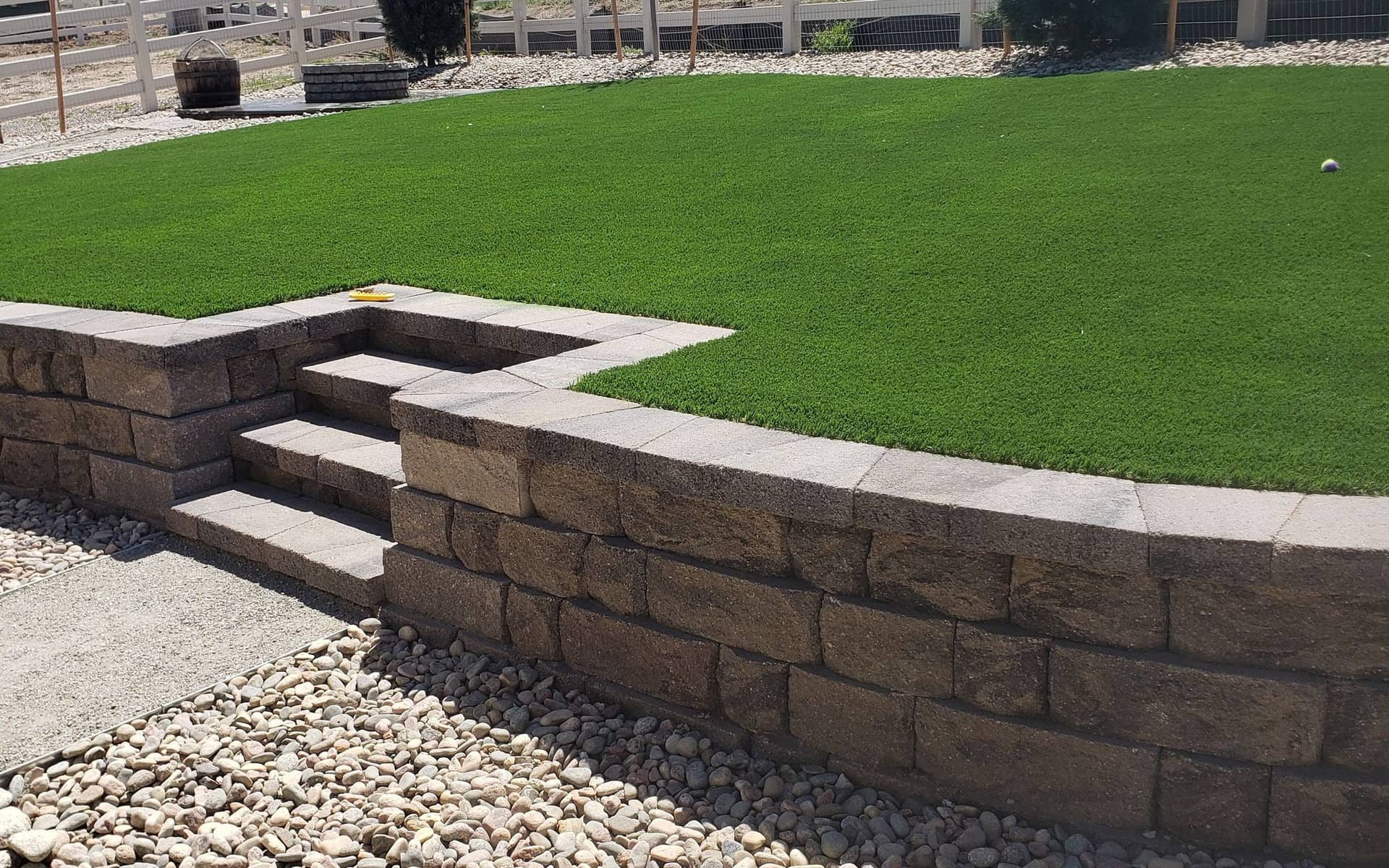
Drive through any established Front Range neighborhood and you'll see them: retaining walls leaning forward, blocks separated at the top course, railroad ties rotted through and bowing into the yard. Almost none of those walls failed because the soil was too heavy. They failed because water got behind them and had nowhere to go.
Here's what happens. Water soaks into the soil behind the wall and can't drain out. In a Colorado winter that saturated soil freezes and expands, pushing the wall forward a fraction of an inch. It thaws, the wall doesn't come back, and the cycle repeats every freeze-thaw swing — and we get dozens of those a year. Five winters in, the top course is out an inch. Ten winters in, the wall is done.
The fix is unglamorous and it's mostly invisible once the job is finished. First, a compacted base trench below grade — the first course should be buried, not sitting on the dirt surface. Second, drainage aggregate behind the full height of the wall, not a shovelful at the bottom. Third, a perforated drain pipe at the base of that aggregate, daylighted to somewhere water can actually exit. Fourth, on taller walls, geogrid tied back into the soil at intervals so the wall and the hillside behave as one mass.
None of that shows up in the finished photo, which is exactly why it gets skipped. A wall built without drainage looks identical to a wall built with it on the day it's completed. The difference shows up in year three.
There's a design question too: one tall wall or two terraced ones? Terracing splits the load, and in Castle Rock and Castle Pines it often produces a better result — two shorter walls with a planted bed between them look better than one tall face and are less likely to move.
If you have a wall that's already leaning, it's worth an honest look before you spend money on it. Sometimes the fix is rebuilding the top courses with proper drainage. Sometimes the wall has moved too far and rebuilding from the base is the only thing that lasts. We'll tell you which one you're looking at.
Call (720) 572-9792 for a free assessment anywhere in Douglas, Arapahoe, Jefferson, or Denver county.